Worship
Orthodox worship is distinct and set apart from other worship forms you will find in your typical 21st Century evangelical congregations. Not because it is anything new or innovative, but rather because it retains the historic worship practices (i.e. the liturgy) set forth by the Apostles and the Early Church, as received in the Liturgy of St. Tikhon. We worship according to an Apostolic Liturgical form: Historical, Biblical, Sacramental, Orderly, and Participatory.
Historic—because it originates with the patterns of worship received from our Hebrew heritage and refined in Christ by the Apostles. These patterns of worship were established in 37 a.d. by the Apostles and faithfully maintained throughout the worst persecutions the Church ever experienced, even unto the complete Christianization of the Roman Empire. It is that continuous heritage which has been passed down from our fathers of Antiquity, further developed through the Medieval Era, refined and clarified in the Protestant Reformation, and preserved unto today.
Biblical—because the Holy Scriptures are the foundation of our worship: the patterns and practices are derived from scriptural precedent, the words of our our liturgies are directly derived from scripture, and the reading of scripture itself frames the worship service. In a typical service we will read multiple chapters from sacred scripture, and of course there is a sermon preached from the readings of the day.
Sacramental—because every Sunday we celebrate the holy sacrament of our Savior Jesus Christ: the Lord's Supper, also called Holy Communion or the Eucharist (from the Greek for "Thanksgiving"). We also celebrate Holy Baptism during our Sunday services whenever someone has need to be baptized. We understand that the Lord's Supper was instituted by Christ as a means of His grace, to be celebrated every time the saints gather together on His day, whereby He gives Himself to us in a true and mystical manner, and preserves us body and soul for His glory and everlasting kingdom.
Orderly—because we have a structure or form of worship. This is often what people may think when they hear the word "liturgical." We have a structure of service which, while allowing for some modest variation, has remained consistent in its structure, Sunday after Sunday, for centuries. All our members know what happens when, so they are always ready to play their participatory role in the worship of the Triune God. And this order maintains a special degree of reverence for God as we humbly yet joyfully approach Him every Sunday morning.
Participatory—because our people worship together openly in unison: through prayer, praise, proclamation, and thanksgiving unto God. We recite the Ten Commandments together, we proclaim the Creed together, we sing hymns and psalms together, we confess our sin together, we pray prayers together, and we receive Holy Communion together. Our worship is communal and participatory, and to be in the pew is to be part of the "worship team."
Historic—because it originates with the patterns of worship received from our Hebrew heritage and refined in Christ by the Apostles. These patterns of worship were established in 37 a.d. by the Apostles and faithfully maintained throughout the worst persecutions the Church ever experienced, even unto the complete Christianization of the Roman Empire. It is that continuous heritage which has been passed down from our fathers of Antiquity, further developed through the Medieval Era, refined and clarified in the Protestant Reformation, and preserved unto today.
Biblical—because the Holy Scriptures are the foundation of our worship: the patterns and practices are derived from scriptural precedent, the words of our our liturgies are directly derived from scripture, and the reading of scripture itself frames the worship service. In a typical service we will read multiple chapters from sacred scripture, and of course there is a sermon preached from the readings of the day.
Sacramental—because every Sunday we celebrate the holy sacrament of our Savior Jesus Christ: the Lord's Supper, also called Holy Communion or the Eucharist (from the Greek for "Thanksgiving"). We also celebrate Holy Baptism during our Sunday services whenever someone has need to be baptized. We understand that the Lord's Supper was instituted by Christ as a means of His grace, to be celebrated every time the saints gather together on His day, whereby He gives Himself to us in a true and mystical manner, and preserves us body and soul for His glory and everlasting kingdom.
Orderly—because we have a structure or form of worship. This is often what people may think when they hear the word "liturgical." We have a structure of service which, while allowing for some modest variation, has remained consistent in its structure, Sunday after Sunday, for centuries. All our members know what happens when, so they are always ready to play their participatory role in the worship of the Triune God. And this order maintains a special degree of reverence for God as we humbly yet joyfully approach Him every Sunday morning.
Participatory—because our people worship together openly in unison: through prayer, praise, proclamation, and thanksgiving unto God. We recite the Ten Commandments together, we proclaim the Creed together, we sing hymns and psalms together, we confess our sin together, we pray prayers together, and we receive Holy Communion together. Our worship is communal and participatory, and to be in the pew is to be part of the "worship team."
Order of Service
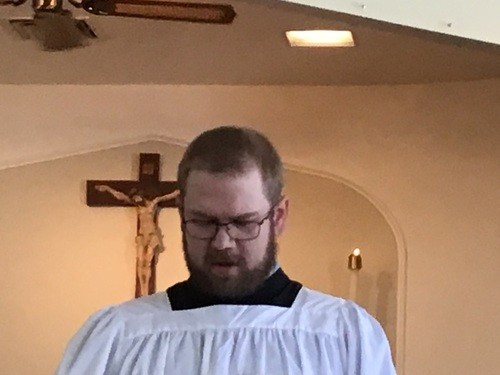
Acolyte John reading the Epistle.
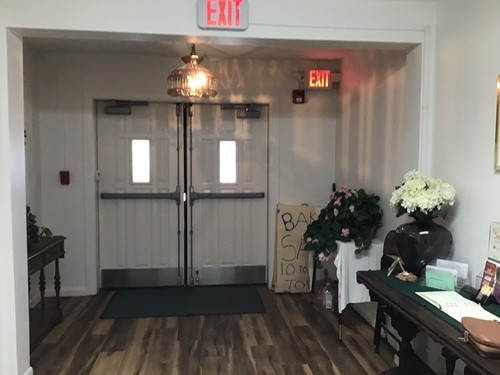
The Church Entrance
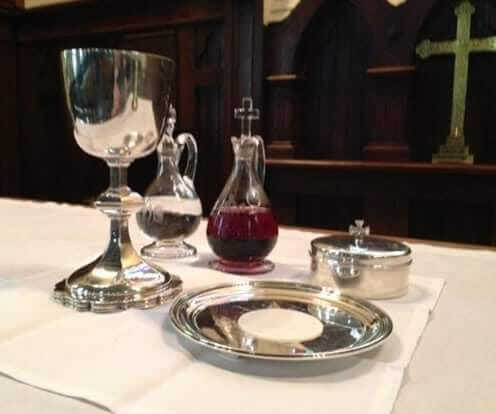
The Communion Elements
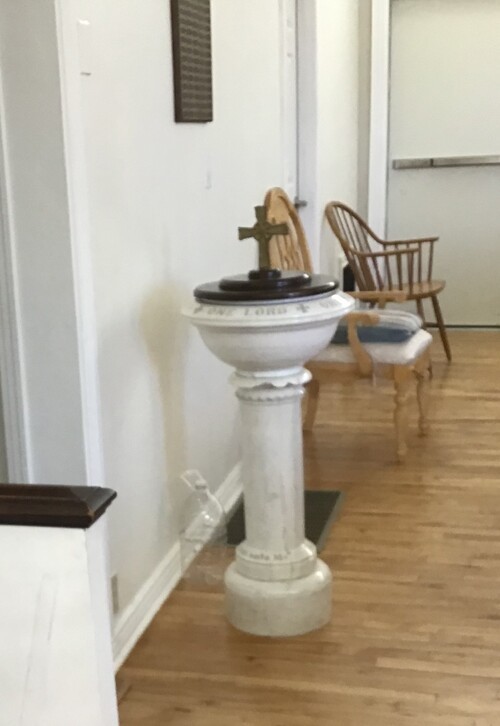
The Baptismal Font
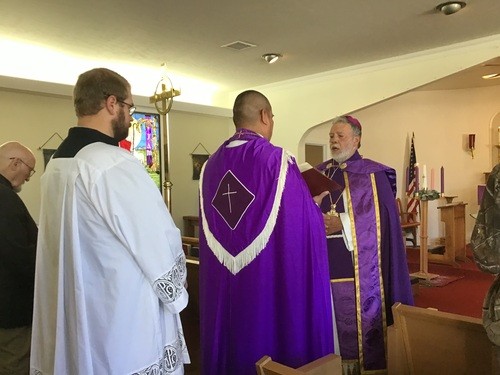
Reading of the Gospel
The worship service opens with a Call to Worship, traditionally marked by the ringing of a bell. While it is now typically rung once, it was historically sounded three times from the Bell Tower.
Following this, the congregation joins in singing the Introit—a hymn sung as the clergy process toward the altar.
The priest then invites the people to join him in prayer.
He then offers the Collect for Purity, a structured prayer used to prepare our hearts for worship by focusing our minds and intentions on God in humility and reverence.
Next, the priest either leads the congregation in reciting the Ten Commandments (commonly done on the first Sunday of each month) or reads Christ’s Summary of the Law, which distills the moral law into two great commandments.
In response, the congregation sings the Kyrie Eleison—a plea for divine mercy.
Another prayer is then offered, asking God for the grace to live in obedience to His will.
This portion of the service—focused on God’s Law—is designed to draw our attention to His holiness and to our own need for His mercy. The Decalogue, as given in the Old Testament, reveals the standard by which all are judged, showing our need for redemption through the blood of Christ. Because we believe that God is truly present with us in worship, it is only fitting that we begin by acknowledging His majesty and our total dependence on His grace. Every moment of life is a gift from Him—one we could never earn or deserve.
The Liturgy of the Word is the part of the service centered on the reading and reflection of Holy Scripture. Each Sunday is marked by its own appointed collect and assigned readings from both the Epistles and the Gospels. This schedule of readings is known as The Lectionary. At St. Paul’s, we use the Authorized King James Version of the Bible—both to honor our spiritual heritage and to preserve the beauty and dignity of its language.
The Scripture portion begins with the Collect of the Day, a prayer that reflects the main themes found in that day’s readings. Following the collect, the Epistle is read aloud. After the reading, the congregation responds with gratitude.
A hymn is then sung by all, after which the Gospel passage is read.
After the readings, the congregation joins together in affirming their faith by reciting the Nicene Creed. This is followed by a short pause in the service for community announcements and blessings—for occasions such as birthdays, anniversaries, or prayers for those in need.
The sermon, typically is based on the lectionary readings and serves as the central teaching moment of this portion of the service. It brings the themes of the Scriptures into focus and helps the congregation apply God's Word to their daily lives.
After the sermon, an offertory is collected and the Doxology is sung.
The Prayer for the Whole State of Christ’s Church is read with special intentions for healing and a prayer for those departed are recited.
This is followed by the General Confession and Absolution, the Sursum Corda, Preface, and Sanctus. The Lord’s Prayer and Prayer of Humble Access are then recited.
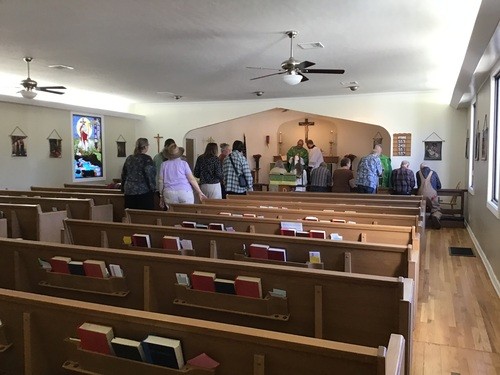
The congregation processes up the center aisle to the Altar Rail for Administration of Holy Communion. The congregation returns to their seats via the side aisles.
A post communion Thanksgiving is recited and the Gloria in Excelsis is sung. The congregation is then blessed and a recessional hymn is sung.
Following this, the congregation joins in singing the Introit—a hymn sung as the clergy process toward the altar.
The priest then invites the people to join him in prayer.
He then offers the Collect for Purity, a structured prayer used to prepare our hearts for worship by focusing our minds and intentions on God in humility and reverence.
Next, the priest either leads the congregation in reciting the Ten Commandments (commonly done on the first Sunday of each month) or reads Christ’s Summary of the Law, which distills the moral law into two great commandments.
In response, the congregation sings the Kyrie Eleison—a plea for divine mercy.
Another prayer is then offered, asking God for the grace to live in obedience to His will.
This portion of the service—focused on God’s Law—is designed to draw our attention to His holiness and to our own need for His mercy. The Decalogue, as given in the Old Testament, reveals the standard by which all are judged, showing our need for redemption through the blood of Christ. Because we believe that God is truly present with us in worship, it is only fitting that we begin by acknowledging His majesty and our total dependence on His grace. Every moment of life is a gift from Him—one we could never earn or deserve.
The Liturgy of the Word is the part of the service centered on the reading and reflection of Holy Scripture. Each Sunday is marked by its own appointed collect and assigned readings from both the Epistles and the Gospels. This schedule of readings is known as The Lectionary. At St. Paul’s, we use the Authorized King James Version of the Bible—both to honor our spiritual heritage and to preserve the beauty and dignity of its language.
The Scripture portion begins with the Collect of the Day, a prayer that reflects the main themes found in that day’s readings. Following the collect, the Epistle is read aloud. After the reading, the congregation responds with gratitude.
A hymn is then sung by all, after which the Gospel passage is read.
After the readings, the congregation joins together in affirming their faith by reciting the Nicene Creed. This is followed by a short pause in the service for community announcements and blessings—for occasions such as birthdays, anniversaries, or prayers for those in need.
The sermon, typically is based on the lectionary readings and serves as the central teaching moment of this portion of the service. It brings the themes of the Scriptures into focus and helps the congregation apply God's Word to their daily lives.
After the sermon, an offertory is collected and the Doxology is sung.
The Prayer for the Whole State of Christ’s Church is read with special intentions for healing and a prayer for those departed are recited.
This is followed by the General Confession and Absolution, the Sursum Corda, Preface, and Sanctus. The Lord’s Prayer and Prayer of Humble Access are then recited.
The congregation processes up the center aisle to the Altar Rail for Administration of Holy Communion. The congregation returns to their seats via the side aisles.
A post communion Thanksgiving is recited and the Gloria in Excelsis is sung. The congregation is then blessed and a recessional hymn is sung.
Why St. Paul's Orthodox Church Is Your Spiritual Home
St. Paul's Orthodox Church offers a unique blend of rich tradition and welcoming fellowship. As a traditional parish, we celebrate the gospel of Jesus Christ and uphold historic Christian beliefs. Guided by the Most Reverend George Parrish, our church is warm and inviting, providing a space for everyone seeking Biblical truth. With roots in the Old Western Rite, our services are enriched with incense and the rituals of the early British church. Whether you're new to Prescott or a lifelong resident, find your spiritual home with us and experience the joy of community worship. Join us and be part of our faith-based congregation today.
Our Sunday Holy Communion is a touchstone of grace and peace, inviting you to experience the love and presence of God in profound ways. Join us at 10:30 am and be a part of worship that transcends the ordinary, connecting you with God and the saints who've worshiped before you. Each moment is crafted to honor our traditions while making space for personal reflection. Discover the joy of Sunday worship. We can't wait to welcome you!
Our Sunday Holy Communion is a touchstone of grace and peace, inviting you to experience the love and presence of God in profound ways. Join us at 10:30 am and be a part of worship that transcends the ordinary, connecting you with God and the saints who've worshiped before you. Each moment is crafted to honor our traditions while making space for personal reflection. Discover the joy of Sunday worship. We can't wait to welcome you!